AI BrandGen Help Illustration: Off-Brand Palette Check
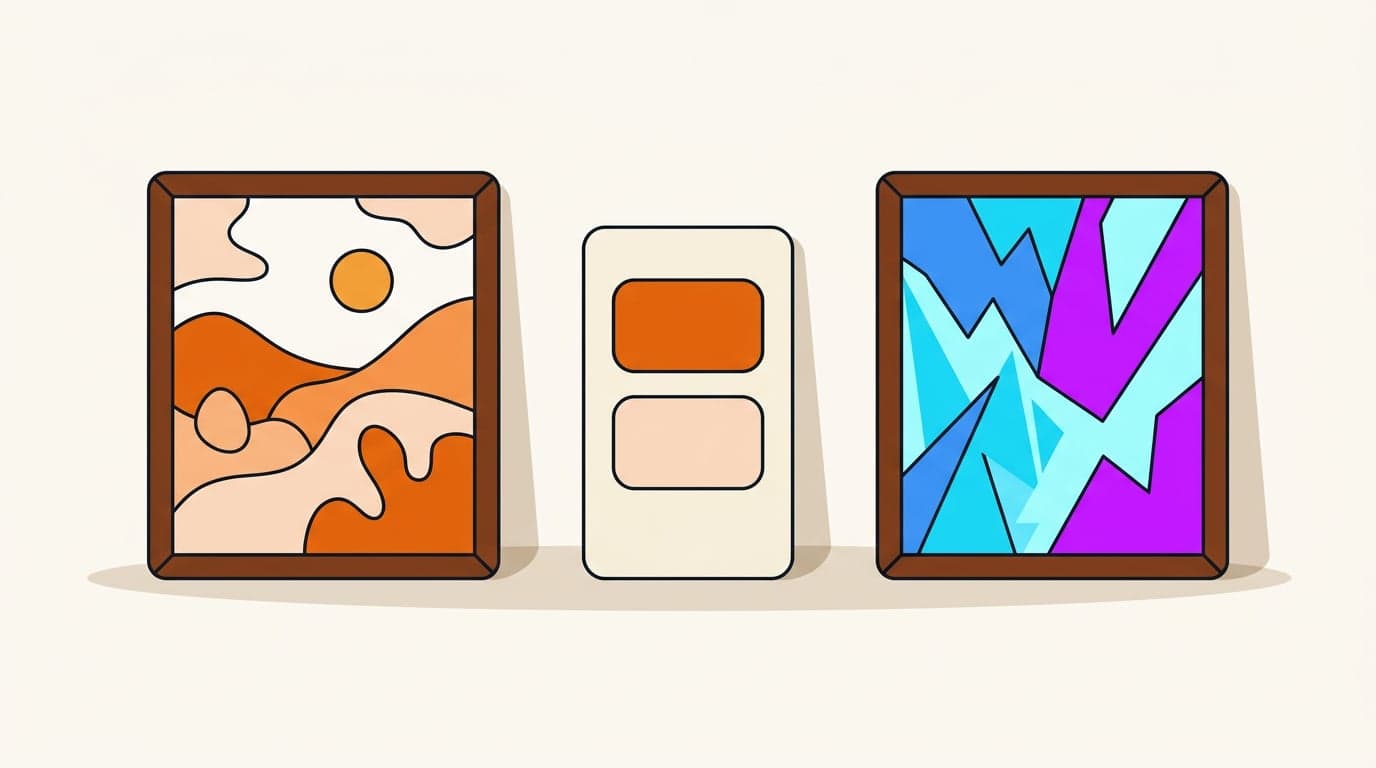
See an AI-generated illustration of a palette card between one matching and one clashing picture, made with Nano Banana 2.1 from written brand guidelines.
Example breakdown
Why it stays on-brand
The orange and cream palette card and matching left picture carry the written palette, while the clashing blue and purple right picture is the deliberate off-brand example.
Marketing use
Use it for a help article on fixing off-brand results, or a brand consistency guide showing right and wrong colour use.
Prompt
A colour palette card with orange and cream swatches between two framed pictures: the left picture matches the palette, the right one clashes in cold blue and neon purple tones. Help-centre thumbnail illustration on a warm cream background. No text, no numbers, no letters, no logos.
How this was generated
Brand DNA came from written guidelines using the same style of preset as in the live app. That DNA was applied as rules on top of the prompt used for this asset (shown in the Prompt section above).
- 1Written guidelinesBrand DNA source
Guidelines path: BrandGen turns pasted or typed brand specs into structured DNA.
Preset exampleBrandGen help-centre illustration guidelinesBrandGen is a brand-consistent AI image generator for small businesses and marketers. Visual style for help-centre thumbnails: clean, modern flat editorial illustration with soft depth and gentle shadows, simple rounded geometric shapes, generous negative space, one clear central metaphor per image. Palette: warm orange #E6650A as the accent, warm cream #FBF9F6 background, near-black #1A1A1A for outlines and details, soft peach #F6D9C3 for secondary shapes. Calm, friendly, trustworthy tone. Never put words, letters, numbers or logos in the image.
- 2Apply DNA to the prompt
Every generation runs through that DNA as hard constraints (colors, type, visual style, tone). The creative intent is entirely in the prompt already shown above.
- 3Final outputIllustration & Concept Art
The same wording with different DNA would look like a different brand. This image used the Brand DNA from step 1.