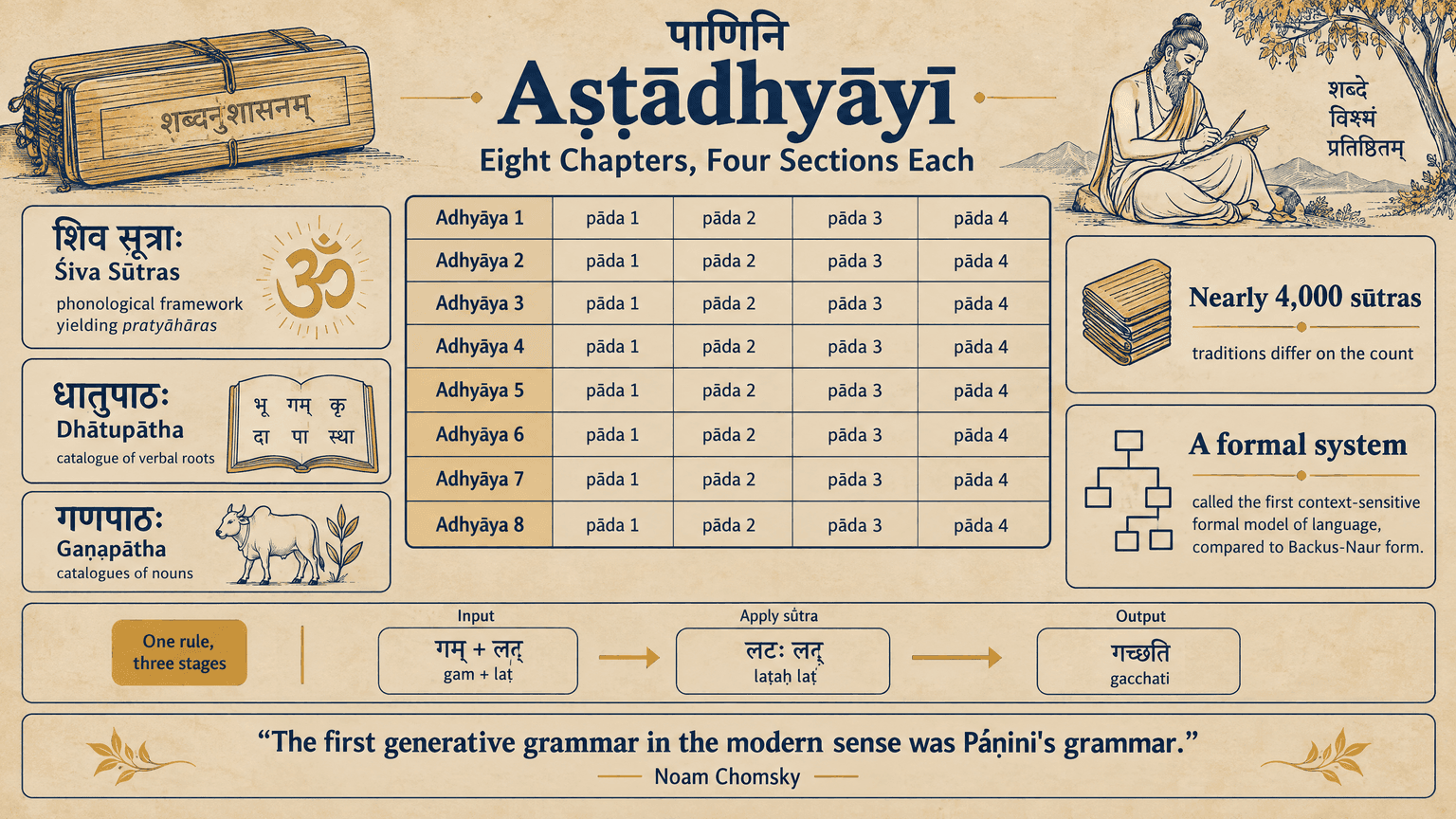
AI Panini Ashtadhyayi Poster, Sunburst Variant
View the same academic poster brief generated with GPT Image 2.5 Sunburst, which resolved more of the small Devanagari labels and card copy.
Example breakdown
Why it stays on-brand
Same reference and the same scholarly parchment language, with the eight-by-four chapter grid and small transliterated labels holding together at size.
Marketing use
Use it for lecture handouts, syllabus artwork, academic explainer posts, or course marketing.
Prompt
Academic infographic poster on Pāṇini's Aṣṭādhyāyī, the Sanskrit grammar of c. 4th century BCE, framed as the earliest formal grammar of any language. Headline "Aṣṭādhyāyī" with "पाणिनि" smaller above it. Subtitle: "Eight Chapters, Four Sections Each". Centre: an 8 by 4 matrix, eight numbered rows labelled adhyāya 1-8, each split into four cells labelled pāda 1-4. Precise, elegant grid. Left column, three cards: "Śiva Sūtras: phonological framework yielding pratyāhāras", "Dhātupātha: catalogue of verbal roots", "Gaṇapātha: catalogues of nouns". Right column, two cards: "Nearly 4,000 sūtras" (traditions differ on the count), and "A formal system" (called the first context-sensitive formal model of language, compared to Backus-Naur form). Below the matrix, a narrow strip showing one rule transforming input to output in three linked stages. Bottom band, one quotation: "The first generative grammar in the modern sense was Pāṇini's grammar." attributed to Noam Chomsky. Set each Sanskrit term in Devanagari with Roman transliteration beneath. English copy in Latin script, spelled exactly.
How this was generated
Brand DNA came from your reference visual. That DNA was applied as rules on top of the prompt used for this asset (shown in the Prompt section above).
- 1Reference creativeBrand DNA source
Upload path: BrandGen reads palette, typography, and style cues from one reference asset.
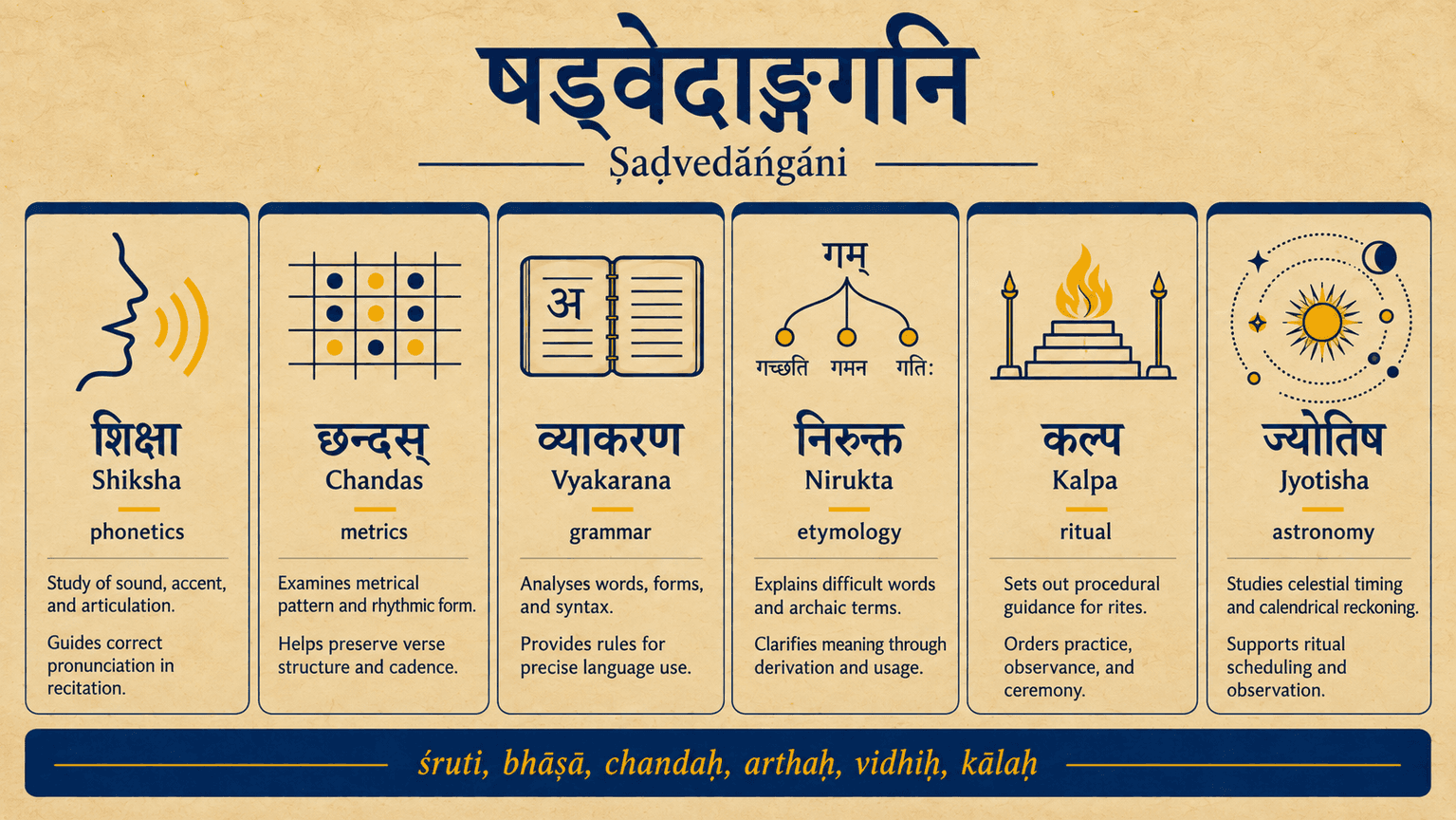
- 2Apply DNA to the prompt
Every generation runs through that DNA as hard constraints (colors, type, visual style, tone). The creative intent is entirely in the prompt already shown above.
- 3Final outputEducation
The same wording with different DNA would look like a different brand. This image used the Brand DNA from step 1.